
NEW PRODUCT TEMPLATE

DEKO 190
Bedpan washer disinfector for automatic washing and thermal disinfection of re-usable items
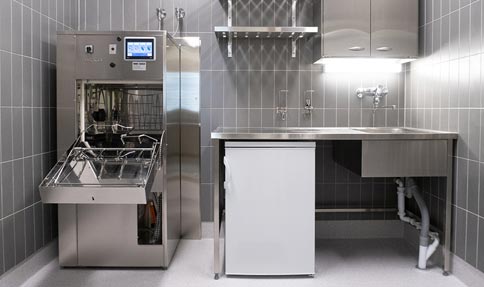
DEKO 190 is designed to empty, flush, wash and thermally disinfect human waste containers such as bedpans, urine bottles, kidney bowls and suction bottles. The machine can also be used to process items such as solution bottles, cleaning equipment and shoes, along with nearly all re-usable care products that circulate internally within a ward and that are not in contact with mucous membranes or broken skin.
Thanks to its superior washing efficacy, the DEKO 190 is also capable of pre-washing instruments before they are sent for washing and sterilisation.
Available in two variants: DEKO 190 GT and DEKO 190 X2. See details below and on the brochure.


Why choose DEKO 190?
- Proven Technology: 40,000+ installations since 1976
- Superior Efficacy: Validated C. difficile reduction
- Patented freshwater recirculation wash method
- Finnish Quality: Manufactured to the highest standards
- Robust and easy to use
- Comprehensive Support: 15+ year parts availability
- Regulatory Compliance: Full EU MDR certification
- Sustainable Operation: Low energy and water consumption
Key features & benefits
Patented Freshwater Recirculation Technology
How it works
Conventional bedpan washers cannot recirculate freshwater during the washing phase with detergent, leaving actual impact time to some seconds. The DEKO 190 works differently. Its powerful pumps (600l/min) continuously recirculate freshwater throughout the entire wash cycle with the detergent. This gives excellent cleaning results thanks to long impact time of several minutes.
Key Benefits
- Achieves instrument-grade cleaning efficacy for ward washer-disinfectors.
- Removes 99.99% of organic soil and bioburden with superior mechanical washing efficiency.
Why it matters
- Dramatically reduces cross-contamination risk between patient care items.
- Helps prevent healthcare-associated infections (HAIs).
- Provides infection control teams with confidence in consistent disinfection results.
- Validated effective against C. difficile spores, critical for outbreak prevention.
Validated Thermal Disinfection
Thermal disinfection is performed according to EN ISO 15883 requirements. Steam is generated in an unpressurized steam generator. All internal surfaces are disinfected in every cycle, including the chamber, water tank, piping, and outlet. Every cycle achieves an A0 value of minimum 600, adjustable up to 13000.
Eliminates 99.99% of pathogens, including resistant bacteria and C. difficile spores. Uses validated thermal disinfection at 90°C with documented holding times.
Meets the stringent infection control standards required in modern healthcare. Chemical-free disinfection eliminates concerns about chemical residues or resistance. Automatic documentation provides audit trails for regulatory compliance and quality assurance programs.
Large Capacity with Versatile Loading
The spacious 72-liter wash chamber accommodates 2 bedpans with lids and 4 urine bottles simultaneously. An integrated drop-down shelf serves two purposes. It acts as a loading platform and provides additional space for specialized inserts and washing accessories.
Process multiple items per cycle. This reduces processing time per item and increases throughput. The 120° door opening makes loading ergonomic and allows items to be automatically emptied during the cycle.
Maximizes operational efficiency during peak ward hours. Maintains consistent disinfection quality. Reduces staff workload and minimizes manual handling of contaminated items, protecting healthcare workers from infection exposure.
Advanced PLC Control with Multiple Program Options
A Programmable Logic Controller (PLC) runs a state-of-the-art operating system. It provides 4 factory-set programs tested and approved to EN ISO 15883 standards. It also offers virtually unlimited custom programming capability. Multi-level access codes protect against unauthorized modifications.
Choose from flush, short, normal and intensive cycles to match urgency requirements. Programs adapt easily to special washing needs while maintaining validated performance.
Optimizes workflow 24/7 by simple user interface and reliable disinfection results. Special service and maintenance control system provides valuable data for performance monitoring, troubleshooting, and preventive maintenance planning.
Independent Process Verification and Recording
GT variant: A temperature indicator, independent from the controller, verifies that disinfection temperature is achieved. This meets EN ISO 15883-3, level a.
X2 variant: A separate temperature recorder with independent sensors records complete process data. This includes temperature, pressure, time, and cycle configuration. This meets EN ISO 15883-3, level b.
Tamper-proof documentation of every cycle provides quality assurance. Meets regulatory requirements for medical device reprocessing. The X2 stores data on 32GB internal memory, transferable via USB or network.
Provides audit trails for infection control compliance. Supports root cause analysis if infections occur. Demonstrates due diligence for accreditation and regulatory inspections. Every cycle is confirmed to meet validated parameters.
Intelligent Safety and Quality Controls
Multiple automated monitoring systems ensure optimal performance. Foam and washing water pressure control automatically maintains proper water pressure. If excess foam or a pressure drop occurs, the machine drains and restarts the cycle phase. It will attempt this up to 3 times. Load temperature protection prevents overheating. A detergent low-level indicator alerts when chemical replacement is needed. An optional flow meter verifies correct detergent dosing.
Automatic error detection and correction ensure every cycle completes successfully. Operators receive clear notifications if manual intervention is required.
Prevents failed cycles that could compromise patient safety. Reduces user error and minimizes reprocessing needs. Ensures consistent quality even with varying operator experience levels.
Energy and Water Efficiency
The DEKO 190 delivers superior cleaning performance while using only 38 litres of water per cycle. This is made possible through efficient freshwater recirculation. A powerful 600 L/min circulation pump delivers high-pressure washing with minimal water consumption.
Lower operational costs through reduced water and energy consumption per item compared to conventional bedpan washers.
Supports healthcare sustainability goals while reducing operating expenses. Lower energy consumption means cost-savings and a reduced carbon footprint. This is important for facilities pursuing environmental certifications. Economic efficiency improves ROI over the machine’s 15+ year service life.
Comprehensive Documentation and Connectivity (X2 variant)
The DEKO 190 X2 includes the following features.
7″ colour touchscreen display with intuitive interface. 32GB internal storage for all process data. Optional network connectivity (Ethernet) for remote monitoring. Optional panel printer for immediate documentation. Data export via USB or FTP to external servers. Remote access capability for technical support.
Provides a complete digital record of all cycles with detailed process parameters. Network integration enables centralized monitoring across multiple machines and automated alerts to facility management.
Streamlines quality documentation and reduces paperwork. Enables proactive maintenance through remote diagnostics. Supports facilities moving toward smart hospital infrastructure. Simplifies accreditation preparation by providing instant access to processing records.
Advantages of DEKO 190 vs. Macerators
DEKO 190
Advantages
+ Simple to use
+ Safe for staff & patients
+ Multi-use solution
+ Conforms to ISO 15883-1, -3 & -5
+ Reliable & consistent washing & disinfection
+ Long service life
+ Output same as toilets = safe option for sewage systems
Disadvantages
— Higher initial investment
— May require regular validation
VS
Macerators
Advantages
+ Simple to use
+ Safe for patients
+ Lower capital investment
Disadvantages
— No cleaning or disinfection
— High on-going cost of single-use goods
— Generates large amount of waste
— Additional space for storing consumables
— Additional strain on surface cleaning & disinfection
— Limited usability
Validated performance data
MICROBIAL REDUCTION
Vegetative bacteria
6-log reduction (99.9999%)
C. difficile spores
4-log reduction (99.99%) MRSA, VRE, and other resistant pathogens: >5-log reduction
Source: Independent validation testing by HygCen Germany GmbH, 2025
CLEANING EFFICACY
99.99%
Organic soil removal
>99.99%
Protein residue removal
100% pass rate
Visual cleanliness
Mechanical washing efficiency
Equivalent to instrument washer-disinfectors
Test Method: EN ISO 15883-5 soil test protocol
Applications & use cases
Hospital Ward Sluice Rooms
Primary Use:
Processing bedpans, urinals, kidney bowls, suction bottles, and patient wash bowls. Typical Volume: over 100 items per day per ward.
Key Benefits:
Automated emptying and disinfection eliminate manual handling of infectious waste. Reduces staff exposure to pathogens and unpleasant odours. Delivers consistent quality regardless of operator experience. Fast cycle times maintain workflow during busy periods. Validated C. difficile or other HAI removal is critical for outbreak prevention.
Recommended Model:
DEKO 190 GT for single wards. DEKO 190 X2 for multi-ward facilities or those requiring detailed documentation.
Aged Care Facilities (Nursing Homes)
Primary Use:
Processing bedpans, urinals, kidney bowls, suction bottles, and patient wash bowls. Typical Volume: up to 100 items per day depending on facility size.
Key Benefits:
Protects vulnerable elderly residents from cross-contamination. Reduces physical strain on care staff handling contaminated items. Maintains dignity through discreet, automated processing. Simple operation is suitable for varied staff skill levels. Lower water and energy costs compared to manual washing.
Recommended Model:
DEKO 190 GT, DEKO 190 X2 for those with regulatory documentation requirements.
Implementation Note:
Many aged care facilities install one DEKO 190 centrally rather than multiple units per wing. This reduces capital costs while centralizing infection control procedures.
Pre-Washing Surgical Instruments
Primary Use:
Removing gross contamination from instruments before CSSD processing. Typical Volume: Variable depending on surgical caseload.
Key Benefits:
Superior cleaning efficacy reduces organic soil and bioburden reaching CSSD. Improves the efficiency of final instrument processing. Prevents biofilm formation that can occur if instruments await cleaning. Extends the service life of expensive surgical instruments. It reduces chemical consumption in CSSD as manual brushing is no longer necessary when the instrument arrive.
Recommended Model:
Any DEKO 190 variant. X2 is preferred for outbreak documentation.
Technical Note:
The DEKO 190 provides excellent pre-washing. However, it is not a substitute for validated instrument washer-disinfectors. Instruments must still undergo final processing per EN ISO 15883-2 requirements before sterilization.
Infection Control During Outbreaks
Primary Use:
Enhanced disinfection protocols during C. difficile, norovirus, or other infectious outbreaks. Typical Implementation: Intensive cleaning cycles and increased processing frequency.
Key Benefits:
The combination of high cleaning efficacy and powerful thermal disinfection provides reliable protection against resistant pathogens. The automated process ensures consistency during high-stress periods. Documentation provides an audit trail of outbreak response measures. It protects staff who may be processing contaminated items more frequently.
Recommended Model:
Any DEKO 190 variant. X2 is preferred for outbreak documentation.
Clinical Evidence:
Facilities using DEKO ward washers report faster outbreak resolution and lower secondary infection rates compared to manual disinfection methods.
Complementary products

DC2200
Spacious drying cabinet for instruments, glass and plasticware, containers and hoses

DEKO D260
Instrument washer-disinfector for high washing capacities
FAQ
What is the difference between the DEKO 190 GT and X2 variants?
The GT variant features independent tamper-proof process verification with a 3.7″ touchscreen. It is ideal for facilities that need reliable confirmation of disinfection temperature achievement. The X2 variant offers advanced independent process recording with a 7″ color display and optional non-touch automatic door. It stores complete cycle data, including temperature, pressure, and time, on 32GB internal memory with USB and network export capability. The X2 is recommended for facilities requiring detailed documentation for accreditation, or organizations implementing quality management systems. Both variants use the same patented freshwater recirculation technology and achieve identical disinfection results.
How long does a typical wash cycle take?
Standard cycles short, normal and intensive typically complete in 9-13 minutes. All standard cycles deliver validated thermal disinfection. Cycle duration depends on the selected programme according to the soil level and the type of washable items.
Can the DEKO 190 reprocess surgical instruments?
The DEKO 190 excels at pre-washing surgical instruments before they proceed to the Central Sterile Services Department (CSSD) for final sterilization. Its superior freshwater recirculation technology provides cleaning efficacy equivalent to instrument washer-disinfectors, far superior to conventional bedpan washers. This pre-cleaning removes organic soil effectively, making subsequent instrument reprocessing more efficient and reliable. However, the DEKO 190 should not be used as a substitute for validated instrument washer-disinfectors for the final processing of surgical instruments. Instruments must still undergo final processing per EN ISO 15883-2 requirements before sterilization.
What care and maintenance is required?
Daily: Check the drainage, washers and nozzles for blockages and verify detergent levels. Weekly: Clean door seals with mild detergent and inspect spray arms. Quarterly: Detergent dosing system rinse. When needed: Replacing detergent container, wiping the outer steel panels, cleaning the display, chamber cleaning. Annually: Comprehensive maintenance including validation testing and replacement of wear parts according to annual maintenance schedule.
The machine features an automatic maintenance reminder system. It notifies operators when service is due. DEKO authorized distributors offer comprehensive service plans with preventive maintenance, priority response times, and genuine parts availability guaranteed for 16 years.
Is installation complex?
Installation typically takes 3-4 hours. It requires standard utility connections: cold and warm water (1-8 bar pressure), electrical supply (voltage varies by region), and a drain connection (Ø110mm floor or wall). The machine requires 600mm width x 630mm depth of floor space with adequate clearance for door opening.
DEKO MedTech’s authorized local service partners provide the following: Pre-delivery site inspection and readiness checklist. Professional installation by factory-trained technicians. Commissioning and validation testing with IQ/OQ documentation. Comprehensive on-site operator training. User manuals and quick reference guides.
Most installations complete in one working day, including training.
What warranty and support is provided?
Standard Warranty: 2 years of comprehensive coverage on parts and labour. Extended Warranty: Up to 5 years available.
Support includes: DEKO MedTech’s authorized local service partners provide on-site operator training during installation. User manuals in multiple languages. Online resources. Email support for the service partners at service@dekomedtech.com with a 24-hour response. Phone support during business hours. Remote diagnostics available for X2 variants. Genuine DEKO spare parts guaranteed available for 16 years. Displays, PLC components and software versions are available for 10 years.
Local Service contracts are available at DEKO MedTech’s authorized local service partners for annual preventive maintenance visits and priority emergency response.
How does it perform against C. difficile contamination?
The DEKO 190 demonstrates exceptional washing efficacy against Clostridioides difficile spores, one of the most persistent and challenging pathogens in healthcare environments. Independent laboratory testing conducted by HygCen Germany GmbH (2025) validated a 4-log reduction (99.99% reduction) of C. difficile spores through highly effective mechanical cleaning.
The result is driven by the DEKO 190’s advanced washing performance and patented freshwater recirculation principle, which are critical for the effective removal of organic soil and bacterial spores during the washing phase.
Healthcare facilities experiencing C. difficile outbreaks have reported significant reductions in infection rates after implementing DEKO 190 units as part of their infection prevention workflow.
Download our white paper “Washing Efficacy Against C. difficile” for complete validation data and test methodology.
What training is provided?
Comprehensive training is included with every installation.
On-site training: operation, daily maintenance, troubleshooting, and safety procedures. Hands-on practice: Operators load actual items and complete supervised cycles. Documentation: User manuals, quick guides, maintenance schedules, troubleshooting guides. Refresher training: Available upon request for new staff or procedural updates. Train-the-trainer: Programs available for facilities wanting internal training capability.
The DEKO 190’s intuitive touchscreen interface minimizes training requirements. Most operators become proficient within 2-3 supervised cycles.
What are the operating costs per cycle?
Actual costs vary by region, utility rates, and specific operational patterns. Thanks to its higher washing capacity, the DEKO 190 enables lower operational costs per washable item compared to conventional bedpan washers, while also providing superior infection control outcome
Is operation noisy?
The mean sound power level is 65 dB(A), comparable to normal conversation volume. This makes the DEKO 190 suitable for operation adjacent to patient care areas. Insulated double-wall construction and vibration-dampening design minimize noise transmission. Most noise occurs during the high-pressure wash phase. Thermal disinfection operates very quietly. Facilities can confidently install DEKO 190 units in sluice rooms near patient rooms, nursing stations, or staff work areas without disturbing clinical activities.
Ready to Enhance Your Infection Control Program?
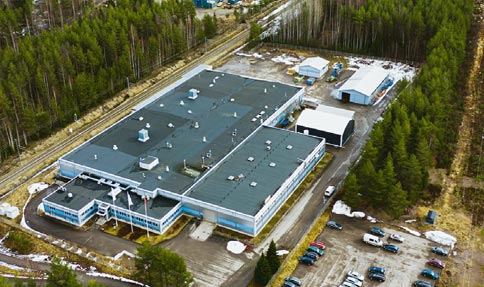
The DEKO 190 represents over 50 years of Finnish engineering excellence in medical device reprocessing. There are more than 40,000 installations across 40+ countries. Healthcare facilities worldwide trust DEKO technology to protect patients and staff from healthcare-associated infections.
Get personalized pricing and expert consultation for your facility.
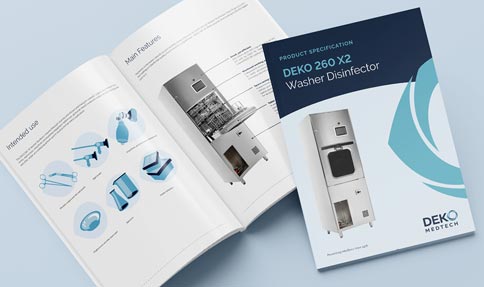
Complete technical specifications in one PDF.
Get personalized pricing and expert consultation for your facility.